
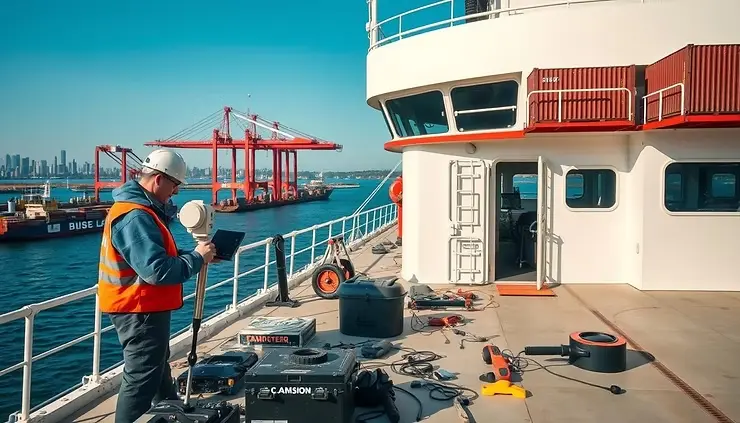
In the complex ecosystem of chartering, the handover and redelivery of a vessel are critical financial checkpoints. Whether you are an owner handing over a clean ship or a charterer taking operational control, the On-Hire and Off-Hire condition surveys act as the ultimate line of defense against future disputes. Knowing what each party should instruct—and precisely when—can make the difference between a smooth commercial transition and prolonged, costly claims.
1. The Core Purpose: Why These Surveys Matter
An On-Hire survey records the exact physical condition, structural status, and remaining bunker quantities of a vessel at the precise moment a charter commences. Conversely, the Off-Hire survey captures the vessel’s state at redelivery.
- Any pre-existing structural damage, wear and tear, or machinery deficiencies noted during the on-hire survey protect the charterer from being unfairly blamed later.
- Conversely, any new dents, damages, or excessive wear discovered at redelivery provide the owner with the indisputable evidence needed to claim compensation from the charterer’s deposit or P&I club.
2. What Owners Should Instruct
For owners, the primary objective is to safeguard their asset against redelivery claims and ensure that bunker quantities and ship conditions are recorded accurately to avoid under-recovery.
- Joint Survey Coordination: Instruct your master and appointed independent surveyors to conduct a joint survey with the charterer’s representative. Never rely solely on crew-generated logs if a commercial dispute is foreseeable.
- Comprehensive Bunker Sounding: Instruct the surveyor to verify soundings, temperatures, and densities of all fuel on board (IFO, MGO) at delivery and redelivery. Clear bunker ROB (Remaining on Board) figures prevent heavy financial leakage during redelivery adjustments.
- Detailed Defect Photography: Ensure every pre-existing scratch, cargo hold coating issue, or deck indentation is photographed, logged, and signed off in the delivery protocol.
- Scope Rigidity: Instruct your surveyor to check machinery operational records, class status, and structural integrity against charter party specifications to establish an unassailable baseline.
3. What Charterers Should Instruct
For charterers, the focus is defensive: ensuring they do not inherit pre-existing structural flaws or pay for undocumented damages or excess bunkers that aren’t legally theirs.
- Independent Representation: Always instruct an independent, qualified marine surveyor to represent your interests rather than blindly accepting the owner’s figures.
- Cargo Hold Cleanliness & Condition: If entering a charter for dry bulk, instruct the surveyor to perform a rigorous hold inspection (down to grain-clean standards, if applicable) before loading commences. Finding existing rust scaling, paint peel, or structural buckling before loading saves you from massive off-hire or cargo contamination claims later.
- Speed and Consumption Baseline: Instruct the surveyor to document the vessel’s operational performance parameters and draft marks accurately, safeguarding against subsequent performance disputes.
- Redelivery Protection: During off-hire, ensure your surveyor thoroughly records the vessel’s condition to prove that any normal wear and tear is not misconstrued as charterer negligence or abuse.
4. Timing is Everything: When to Execute the Surveys
Timing can invalidate a claim if mismanaged.
- The On-Hire Window: The survey must take place immediately before or concurrently with the delivery of the vessel, exactly when the time charter officially commences and physical control changes hands.
- The Off-Hire Window: The survey should be executed right at the point of redelivery—typically upon completion of final cargo discharge or when the vessel is placed back at the owner’s disposal.
- The Danger of Delay: Waiting hours or days after delivery/redelivery to conduct the survey introduces variables like weather, minor operational impacts, or local port movements, completely diluting the legal strength of the survey report.
The Takeaway
On-hire and off-hire surveys are not mere administrative box-ticking exercises; they are financial and legal instruments. By instructing experienced independent surveyors to capture precise bunker data, comprehensive photographic evidence, and accurate structural conditions right on schedule, both owners and charterers can eliminate ambiguity and protect their commercial exposure in the Bay of Bengal and beyond.